

Landing the evidence needed to progress an innovation is a big challenge for the best of innovation teams. Stakeholders tend to seek a level of certainty that won’t be possible without time, trial and error. Financial projections face benchmarks based on established products or services. Isolating the impact of changes can be particularly difficult where multiple partners are involved or where user benefits are impacted by wider factors.
Team brilliance aside, it really helps to take stakeholders on a SHARED LEARNING JOURNEY. This journey must be (and feel) distinct to a project. Success is learning that enables confident decisions and will probably challenge timing expectations. If that learning leads to a solution changing or being stopped that’s great – resources need to be redirected. Here’s a handful of suggestions to ensure everyone is on the same learning journey:
1. Use a LEARNING PLAN
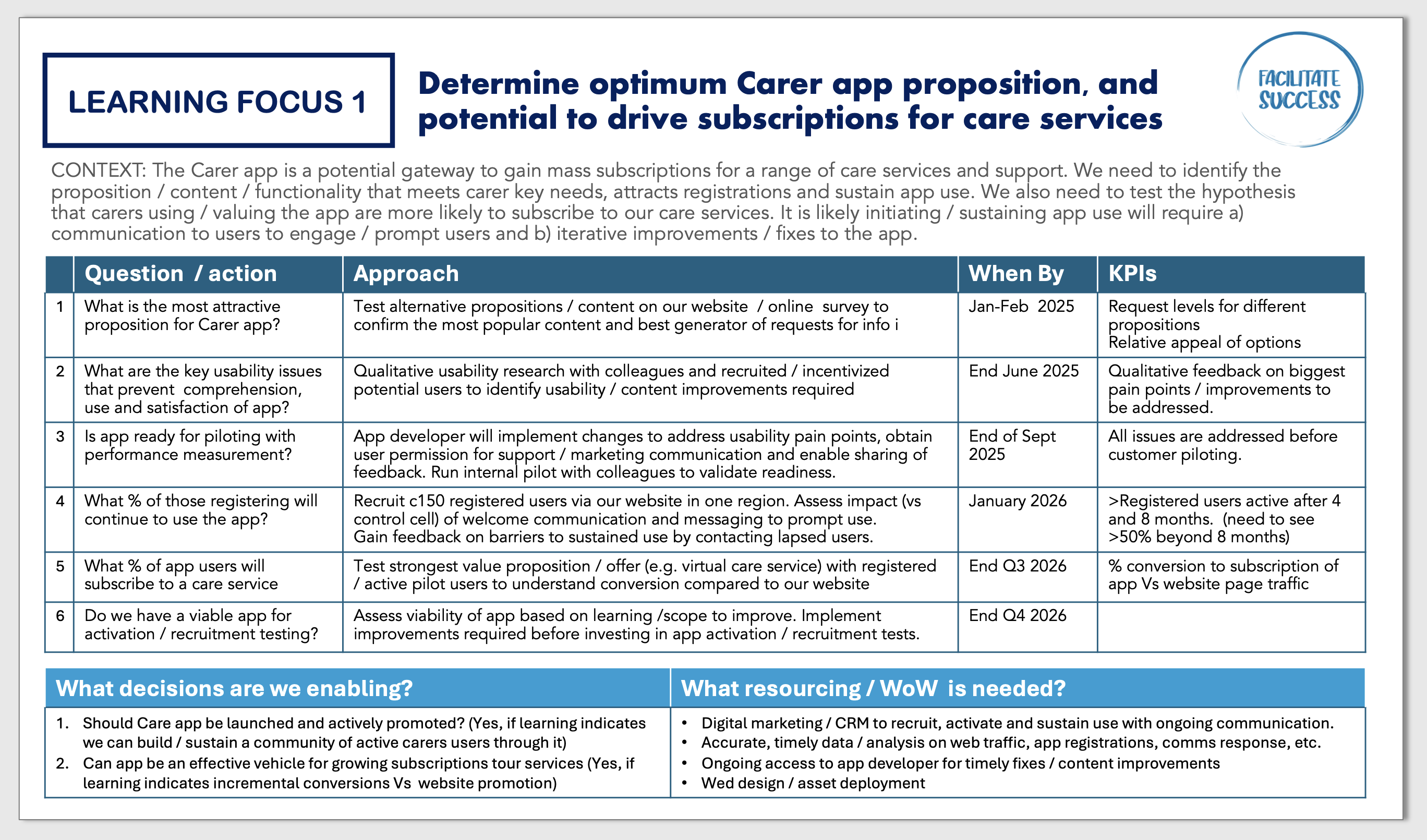
Early steps are about establishing confidence on the feasibility and scale of opportunity. Using a learning plan forces clarity on the key assumptions that must be tested. It distinguishes the focus from project management – success is about relevant learning that enables decisions.
An anonymous example of a learning plan.
2. Establish SPEED OF LEARNING as a key success measure
Speed of learning matters a lot. If research and experiment findings are delivered at pace stakeholders will see key questions being addressed and important new questions emerge. Keeping everyone together on the journey becomes easier.
Speed helps placate stakeholders anxious to move to a more public action with a pilot. Pilots will typically represent a step change in investment requiring an assembled (minimum viable) solution that is evaluated in the real world over a protracted period. Before this you want enough learning / evidence to be confident you can succeed and avoid known pitfalls.
What really helps is alignment on the principle of more learning investment being linked to more confidence on the journey. This requires evidence gaps for decisions to be clearly understood, (hence a shared learning plan!) It also encourages creatively finding pragmatic and low cost ways to build learning and validate assumptions. Using a pop-up store to assess new formulations or testing interest in a community service in one library are accessible experiments that can help unlock bigger learning investment.
Innovation involves a learning journey where increased confidence in a solution unlocks further investment. Fast, cheap learning reduces the risk of wasted investment and opportunity cost of effort. Have you enough learning to prove your concept can work before you commit resource to a pilot? What pragmatic, quick experiments or research would build confidence in success and inform set-up?

3. WIDEN PARTICIPATION in evidence and insight finding
Well presented and engaging insight can unlock commitment. I have seen consumer feedback videos, queues for a prototype and start-up team pitches all seal the deal for stakeholders. Getting colleagues closer to, and more involved in insight and evidence is necessary hard work.
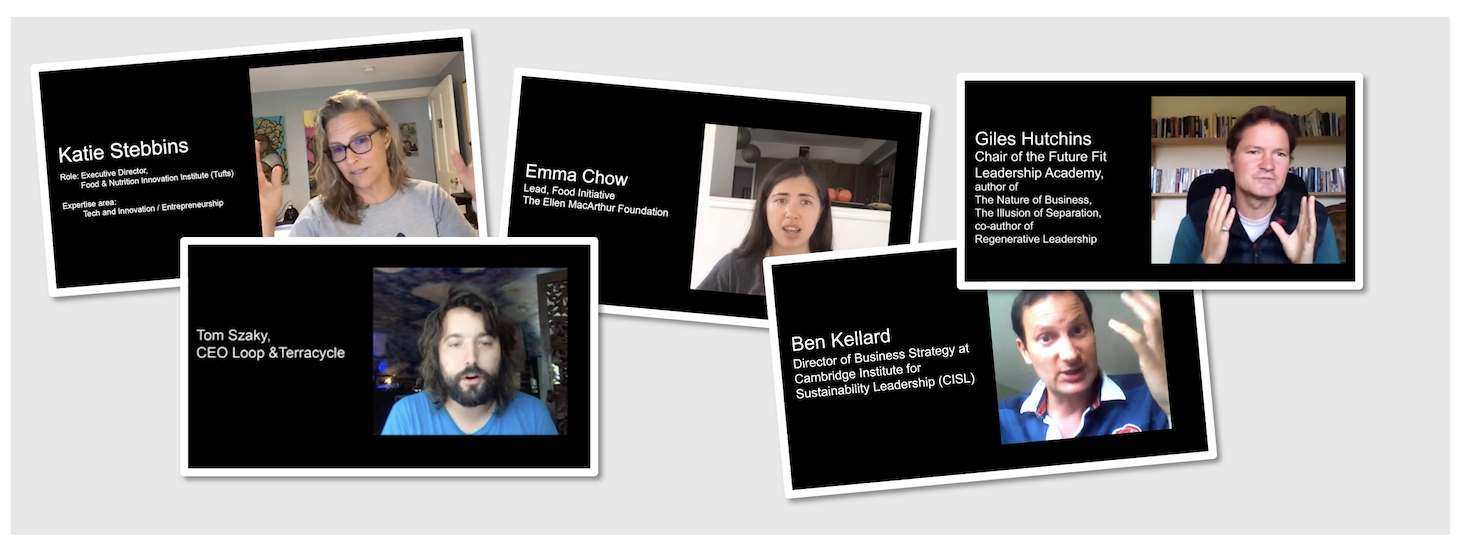
In many projects where time with stakeholders is constrained I find curated strong doses of information are important. For example, I have distilled expert interviews into 10 minute short films addressing critical questions. I also run expert panels inviting stakeholders to listen to discussion on agreed topics before raising questions. Such interventions challenge internal group think and build consideration ahead of specific data.
I love collaborative workshops with experts and co-creating consumers / users. Unfortunately getting a critical mass of senior stakeholders involved in these early stages is difficult to justify. Curated videos enable flexible access and have longevity beyond a workshop.
For those working in the public sector or services establishing a learning group (or circle) where findings and experiences are shared has merit. These groups can provide a collective perspective on changes that can be difficult to isolate. They can also build informed champions for implementing solutions that will require continuous development.
4. Use LEARNING LANGUAGE
Language matters too. Presenting a plan as a learning journey indicates a reward of personal growth and recognition that today’s knowledge is insufficient. A team pursuing a learning plan is distinct to a project where a sequence of progress is expected.
If you are experimenting you will have a hypothesis of an outcome and what will drive this. But as an experiment you will be open to the distinct possibility of different outcomes. This is different to a pilot where you have assembled a solution and are confident you will eventually get to your destination despite expected turbulence!
The right language with more demand for evidence can only help a learning-led culture that supports innovation, engagement, and the capacity for change.
 Facilitate Success