

A leader’s relationship with and support to team members obviously matters hugely. For academics the mechanical sounding “leader–member exchange” (LMX) has provided a focus for studying the drivers and benefits of a high quality relationship / connection that is characterised by trust, liking, and mutual respect. Better relationships will mean team members are more receptive to support or resources offered by leaders. This in turn, means more resources will be embraced with greater reciprocation (hence “exchange”) in the form of loyalty, higher levels of commitment, colleague support, etc. There is potential to build a positive spiral with trust and respect increasing reciprocation that in turn strengthens a quality of connection (so more trust and respect).
The research is (unsurprisingly) compelling. Analysis has shown that job satisfaction, organisational commitment, and turnover intentions are consistently correlated with LMX quality. Similarly, performance and citizenship behaviours (for example, helping colleagues) are also positively related. Career success, empowerment and satisfaction for those with a high-quality LMX has been found to be higher too.
Leader relationships and resource sharing demands attention
The contagious effect of leadership behaviours beyond an individual has always supported attention on relationships and resource sharing. But today’s working context challenges complacency more than ever. Quality interaction time – particularly in-person – is often scarce and set to become more so. The number of remote or hybrid roles will continue to grow significantly. Virtual meetings that bring hugely valued flexibility also increase potential for distraction and low engagement. Screens often compete with other smaller screens for our attention. Many of those attending virtually will be serial multitaskers (and that includes me). Many senior leaders are anxious to protect or increase time spent in the office. It follows they must also look to do more to increase the return (and rewards) from scarce quality interactions.
Making the most of in-person matters
We are hard-wired to respond to in-person interaction and it appears we even employ distinct neuroprocessing pathways for live faces compared to those seen digitally. In-person interactions are consistently shown to outperform all virtual for positive affect and stronger / faster social connection. Being physically present supports a sense of trust and intimacy and a conversation that will flow more organically, allowing for deeper discussions and spontaneous reactions that promote connection. In-person opportunities makes it easier and quicker to build a quality relationship increasing scope to share and receive more resources. So, making the most of them matters.
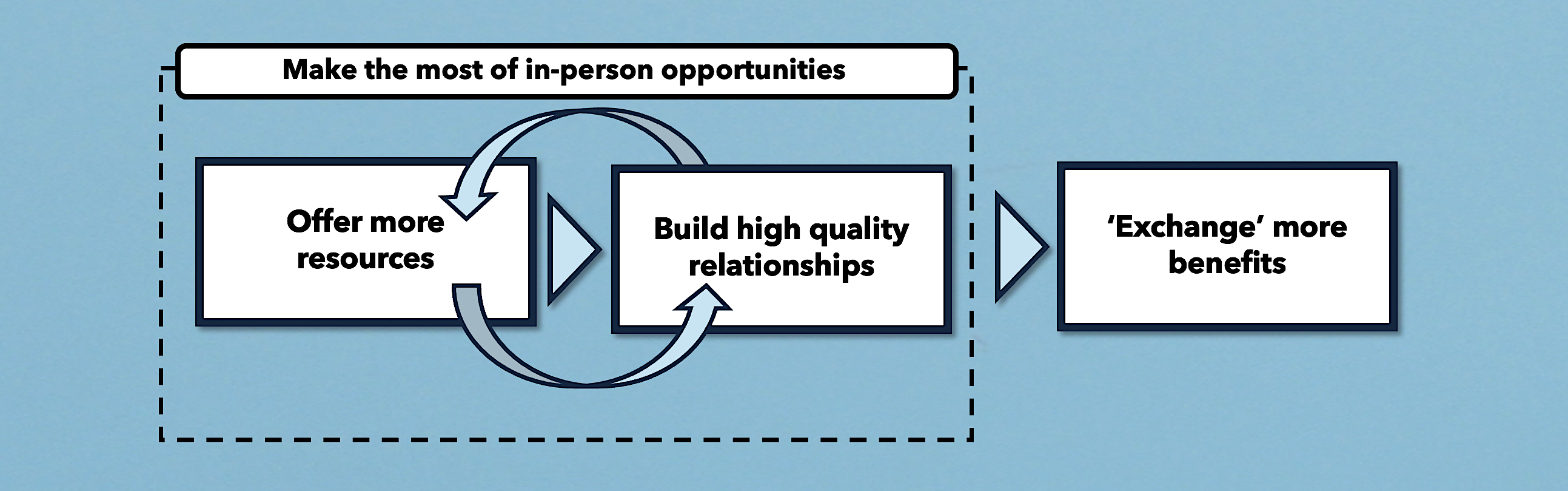
Better relationships ensure more support / resources are received. More relevant resources supports trust and closeness (so better relationships). In-person interaction facilitates relationship building and communication more than virtual.
Have you recently reviewed your 121 resource sharing menu?
I have never been asked this question or really challenged myself on making the most of my interactions. So the idea behind this article is to prompt a review of your ‘menu’ available to exchange with team members and reveal opportunities. The resources I highlight have overlaps and interdependencies – with the sum of the parts much bigger than the list – which I recognise can be added to.
Resources on your menu, of course, are served based on need and after listening. I therefore lead with the resource of empathy that connects to active listening. There will always be valuable guidance for you to share, but facilitating a team member’s self-discovery and exploring of options, provides a foundation for agency, owning change and development. So guidance is placed at the end of my list.

Potential resources that can be exchanged are explained below. In-person interaction and better relationship enhances the exchange.
1. EMPATHY
An empathetic leader will have a genuine interest in those around them – what makes them tick, what motivates them and how they feel. Studies have linked enhanced well-being to empathetic leadership behaviours alongside positive impacts on perceived fairness in the workplace and interpersonal relationships. If team members feel heard and understood it is reasonable to assume they will be more engaged and willing to share ideas.
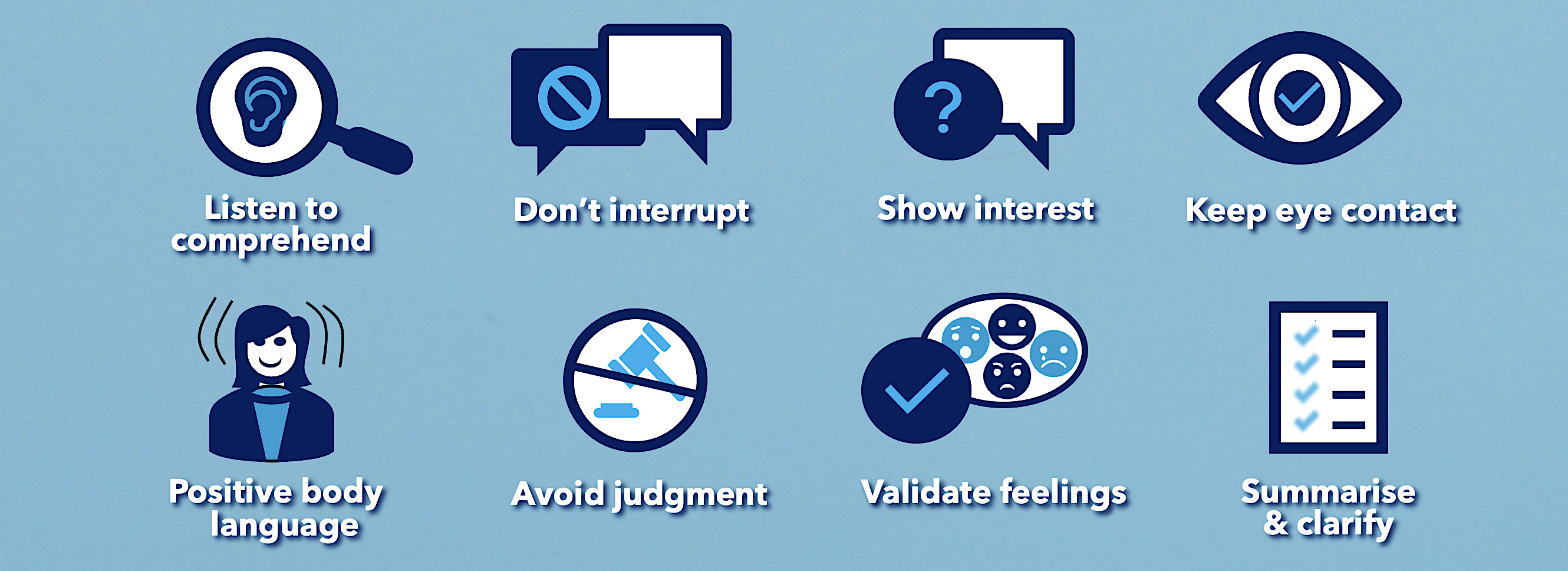
Key to demonstrating empathy is active listening – an attentive focus on what someone is saying, both verbally and non-verbally. Eye contact, indicating engagement and reflecting back what has been shared to ensure understanding all support this. Consistent with coaching practice, avoiding interruptions, early conclusions or unrequested suggestions will demonstrate a desire to understand (and encourages individual problem-solving). A listening ear and validation of feelings can alone be a beneficial resource to offer.
Beyond acknowledgment empathy with active listening facilitates collaboration on solutions. Different perspectives can be recognised, sharing will feel safer and ideas can be built on. Self or co-created solutions engender greater motivation and accountability when it comes to taking action.
Actions to consider:
Identify opportunities to improve your listening. The checklist below may help you reflect on strengths and areas to improve. This short HBR video should highlight some gaps too. It makes good points on trampolining, orientating to needs, avoiding the inadvertent dismissing of concerns, and listening for comprehension (rather than validation).
Invest in coaching skills. A basic understanding will help you support team member self-reflection, goal clarification and problem-solving. (It has helped me curb my desire to jump in with solutions). Conversation structures such as the GROW model will facilitate goal attainment and problem-solving by ensuring space to review current situation and what it means.
2. MEANING
When a team member sees their work as meaningful, they are significantly more likely to be engaged in their job. Meaningful work has been identified as a strong predictor of job satisfaction, and commitment with beneficial outcomes such as higher performance, increased resilience and reduced burnout.
Consistently affirming a team or organisation’s purpose (or the why) can make members feel their actions and work is more meaningful and motivate striving for higher achievement. A shared purpose will also foster a sense of belonging and community within a team, leading to higher morale. Behaviours and storytelling that authentically reveal personal conviction and inspiration matter too.
Acting to connect an individual’s work and its contribution to organisational goals and vision makes a difference too. The well documented experiment of a call centre that raised funds for a university points the way. The group of workers that were reminded (with two stories) of the impact their fund-raising on the lives of benefactors achieved twice the donations of those without this intervention. The clear implication is to combine SMART goals with information on customer benefits (and their impact) to make the greater good vivid. Bring customer feedback into conversations.
Finding ways for a team member to bring more of themselves into their role will also support meaning and ownership. For example, encouraging learning objectives (alongside business) increases the scope for personal growth and fulfilment. Assigning an opportunity to someone who has volunteered or that plays to recognised strengths can also create a greater sense of personal fit and so meaning.
Actions to consider:
Keep purpose salient. Return to it as a topic regularly and in different ways. For example, talk about why the organisation’s purpose matters and motivates you and / or encourage team members to explore and express their “why”. Discuss external impact and communication and their connection to purpose.
Bring to life customer experience and beneficial outcomes. Consider what achieving success at scale makes possible in the future. Find and share stories on the impact on actual customers or communities.
Encourage learning goals. (Alongside business goals) support the inclusion of longer-term learning goals for team members to develop their careers. Role model commitment to personal development too.
3. PSYCHOLOGICAL STRENGTH
Psychological capital is an academic construct from positive psychology. It basically bundles together four healthy psychological states that enhance well-being and performance These are: hope, efficacy, resilience, and optimism. The four states contribute more than the sum of their parts and go beyond a general positive outlook. Hope is the belief that one can act to make things better, even in the face of adversity. Resilience is the capacity to cope or recover quickly from difficulties. These will all be evident in words, mood, actions and behaviours you bring to interactions.
Leaders can also help build psychological capital across teams with performance, and wellbeing benefits. Many of us will have left a meeting with raised spirits or resolve after a leader’s optimism or commitment to move on from a setback has been shared. Studies have found that teams led by optimistic leaders tend to be more creative, collaborative, and better at problem-solving. (A leader’s potential for a positive or negative contagion effect also makes the case for your investment in support (for example, coaching) that sustains their psychological capital).
What may be more newsworthy are findings that LMX (leader-member exchange if you have forgotten) mediates the transfer of their psychological state. Put another way, better quality relationships increases the potential for a leader to passing on their psychological state. This means a leader’s positive psychological state has greatest impact alongside behaviours that build relational quality such as empathy, active listening, and the next resource discussed – recognition.
Actions to consider:
Recognise your psychological capital as a priority. The potential to transfer this to team members gives added importance to sustaining hope, efficacy, optimism and resilience. example. Using a coach is likely to help in supporting goal development, developing strategies to overcome challenges, recognising strengths and building a positive perspective.
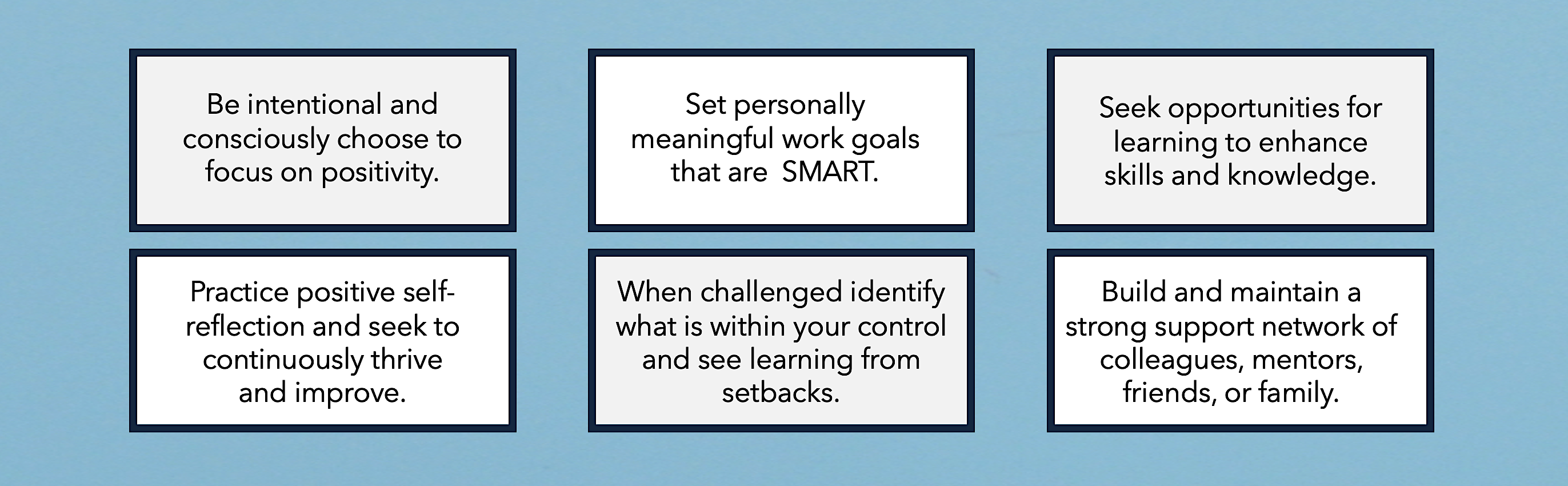
Sourced from: Psychological capital: What it is and why employers need it on the American Psychological Association website.
Show up at your (psychological) best for 121s. A outdoor walk, especially in natural settings, can significantly increase positive emotions, reduce stress, improve mood, enhance self-esteem and so improve your psychological capital. It can help you lean in to the day’s conversations with optimism, a growth mindset and help framing situations or setbacks positively.
4. RECOGNITION
Feedback works best as part of continual growth-orientated commitment from leader and organisation. Environment, relationship with leader and access to their help all matter for effective delivery and desired response. The accessibility of leaders for regular check-ins and their willingness to seek feedback themselves are also positively associated with performance improvement after feedback. Effective goal setting and support for coaching or mentoring will be important too.
Critical, constructive feedback must be part of the mix, but an orientation to seeing and recognising positive actions and outputs is important. Achieving goals, positively influencing others, making important contributions, exemplifying values and reaching milestones are key moments for recognition. New learning, resilience, and effective collaboration should not be overlooked. Likewise, acknowledging the contribution of an idea – in which emotional energy will often be invested and a loss of ownership can hurt.
Positive feedback helps team members by boosting mood, increasing agency, motivating performance. It indicates appreciation and recognition that builds engagement and performance. Positive feedback reinforces a person’s belief in their abilities, leading to increased self-confidence and willingness to take on new challenges.
Research suggests we are universally more receptive to positive feedback and more likely take in information and act on it. It also appears negative experiences are more salient and have a longer shelf life – so vindicating a greater share for positive feedback. According to Gallup research employees who receive verbal praise at least once a week experience increased individual productivity and achieved higher satisfaction scores from customers. The clear implication is that leaders shouldn’t hesitate to give positive feedback when they see progress, learning or results that warrant it. Given problems or negativity tends to grab attention there is a case for actively showcasing what contributes and works well. Praise can immediately lift mood and agency.
Positive feedback is particularly important for those in the early stages of a journey to goal achievement or where doubts exist on success or skills or access to resources. (Their primary need is positive reinforcement and confirmation they are progressing in the right way). Evidence suggests that they are more likely to adhere to a goal after receiving positive feedback. (Positive feedback also seems to be potent where there is scope to adjust goals, ensuring they remain relevant, achievable, and aligned with current progress and needs).
Actions to consider:
Commit to regularly recognising and over thanking people. Aim to include all team members over time and look for the small wins and individual progress alongside newsworthy achievement.
Be specific, be relevant, and timely in your recognition. Help employees connect the recognition to their positive behaviour – a month later diminishes connection and impact.
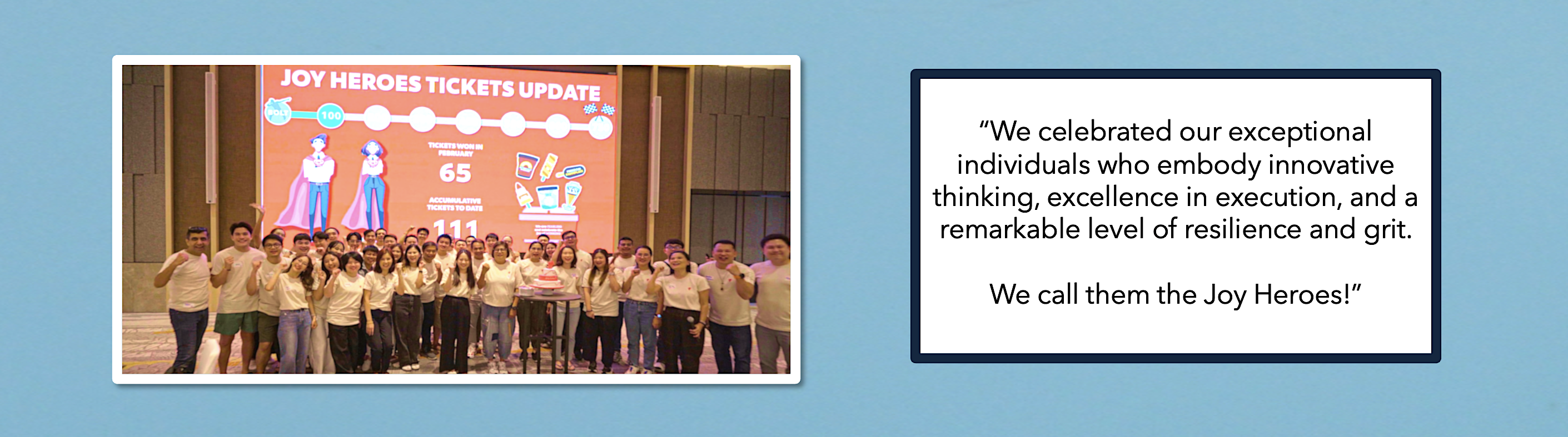
Connect recognition to mission and purpose. This will promote individual motivation alongside a collective sense of purpose and direction. It can simply be part of the explanation or more structured. This leader’s post perfectly illustrates the latter.
5. STRENGTHS AWARENESS
This is arguably, a subset of positive feedback, but it goes beyond recognition and reinforcement. Helping team members identify and apply their strengths for pursuing task and relationship goals has been shown to increase the likelihood of achievement. This is because the use of individual strengths for tasks and relationships generates feelings of vitality, confidence, and a sense of fulfilment. Team efficacy can also benefit. Assignment of projects or tasks that align with individual strengths, where they are more motivated, and efficient, logically lead to improved performance and productivity.
When team member strengths are more salient, they can be pooled more effectively to tackle complex problems. When team members value each other’s strengths, they are more likely to build strong relationships, fostering a positive and supportive work environment.
Identifying strengths is founded on curiosity and interest. Listening and observing individual contributions and interactions will be important alongside inviting their views. It will help to have a reference list of potential strengths that is open to additions. Here is an indicative list – these can be translated into cards for team discussions:
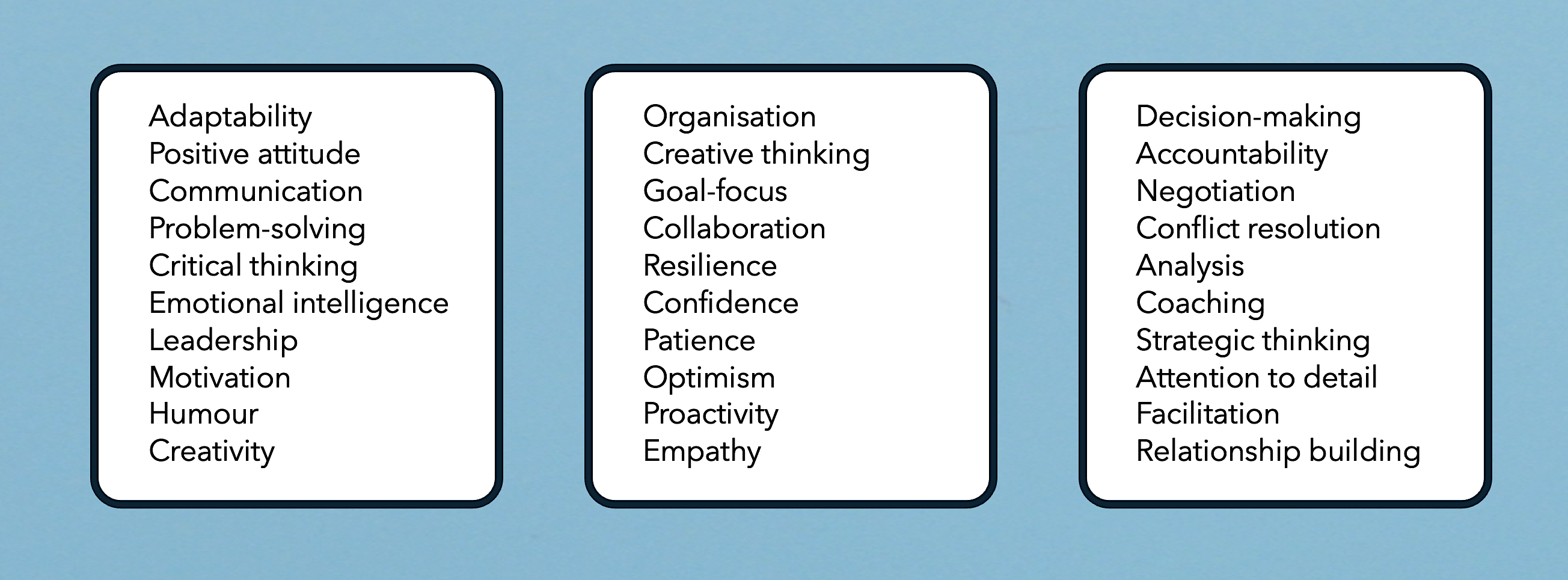
Actions to consider:
Listen, observe, seek feedback and recognise strengths. A conversation on strengths can be stimulated with a strengths assessment. Gallup’s Clifton Strengths assessment is one option: Strength Finder
Run a strength-sharing team session. Dedicated time to identifying and considering individual strengths will positively raise collective awareness. This could flow from a wider ways of working review that considers preferences, needs and support across the team.
6. CRITICAL CHALLENGE
All feedback should be constructive, but it obviously can’t all be positive or reinforce of current unhelpful behaviours. The ability to deliver critical feedback will be greatly helped by a good relationship and a track-record of regular interactions that make it clear you value their contribution and capabilities. Again, in-person 121 delivery can be beneficial, as it will help clarification and conveying that you care, want to support success and are seeking to be helpful. (Private criticism will also be more fruitful because it is much less likely to trigger a person’s defence mechanisms).
The widely embraced approach of sandwiching critical feedback within slices of positive makes some sense. Negative feedback, is likely to be received as both more important and impactful by team members and, especially, by those less certain on their contribution, capabilities or ability to achieve a goal. But a strong working relationship with regular opportunities for in-person discussion will normalise constructive feedback and enable prompt, timely critique as the entire meal with greater potential for adoption.
Highlighting gaps, issues or room for improvement will also be critical for someone who is highly capable or experienced or well advanced in their project journey. They should already feel comfortable in their abilities, know when they’re on the track and can take confidence from progress or past attainment. For these team members giving direct, challenging, ‘negative’ feedback is likely to be more motivating because it helps them improve their skills and advance to the next level. They will be more focused on monitoring their progress toward a goal – so eliciting a negative mood that is attached to lack of goal progress or failure to meet an obligation will probably facilitate action to remedy. Constructive delivery that reveals you care personally remains key as Kim Scott author of Radical Candor explains:
Defensive reactions make it much harder for a person to accept they’ve made a mistake and to learn from it.
7. AUTONOMY
Self-determination theory addresses human motivation and personality, emphasising the importance of autonomy, competence, and relatedness as fundamental psychological needs for intrinsic motivation and well-being too. (Intrinsic motivation is about being driven by the personal satisfaction or interest in a task rather than external rewards). Research has consistently indicated that autonomous motivation is associated with improved performance, satisfaction, and engagement. Autonomy facilitates individuals finding unique and independent ways and so supports creative and diverse thinking across a team. I therefore make the case for autonomy (the strongest predictor of intrinsic motivation) being considered as a specific resource to be exchanged in interactions.
A leader that adopts a (human) growth-mind set (and so a belief in the capacity to learn and grow) will empower team members to take the lead and initiate action. Supporting someone’s belief in their ability to succeed (self-efficacy) in a challenge builds a sense of capability that plays an essential part in autonomous behaviour. Once again, it benefits from empathy and active listening with questioning that supports an individual’s discovery, reflection and choices on opportunities and challenges – including skills development. Beyond ensuring a growth mindset and employing active listening there some additional action areas to consider:
Actions to consider:
Ensure asking questions, raising concerns and admitting mistakes feels safe. Team members need to feel psychologically safe when highlighting issues, mistakes, or knowledge gaps – raising them shouldn’t have negative consequences such as blame or judgement. When mistakes or problems are communicated they should be explored positively as a learning opportunity to improve skills and future performance. Failure to do so constrains questions and taking the initiative. A leader’s response is key – visible annoyance or taking over control will undermine motivation. Guidance from someone who recognises mistakes happen (and recalls their own) will encourage speaking up. It will support the best and fastest team member response – alongside autonomy and their future growth.
Be confident in your vulnerability. Leaders should be comfortable and confident in acknowledging gaps in understanding or mistakes. This promotes psychological safety and trust. A clear commitment to continuous improvement and taking away learning encourages others to be open about their own mistakes and to positively respond. Sharing personal stories on the response to past challenges and failures will help. You may find the Simon Sinek video (emphasising confidence in owning vulnerability) below helpful.
Ensure goals are clear and frequently discussed. Individual objectives and key results obviously must align to organisational objectives. As importantly, team members who are clear on where a project is going and the results that define success will find determining options easier. A leader’s focus needs to be on the destination and results – so validating, aligning and inputting on recommended goals. Milestones and the how should be open to wide autonomy and creativity. Regularly checking-in on destination, results, (and new learning) facilitates goal adjustment as needed without constraining scope for autonomy.
8. SUPPORT NETWORKS
Support networks play a vital role in both personal well-being and collective achievement. Research from the American Psychological Association shows that individuals with strong social support systems experience lower levels of stress, improved mental health, and greater resilience in the face of challenges. In workplace settings, Gallup studies have found that employees who feel connected to others are more engaged and productive. Support networks also foster a sense of belonging, which is linked to higher job satisfaction and retention. When individuals share goals within a trusted group, accountability increases, and motivation is sustained—especially during periods of uncertainty or self-doubt.
Support networks also play a critical role in enhancing problem-solving capabilities, particularly when they are composed of individuals with diverse backgrounds and perspectives. Research shows that diverse teams consistently outperform homogeneous ones in decision-making and innovation. Exposure to varied viewpoints challenges assumptions, broadens thinking, and leads to more creative and effective solutions. Additionally, learning from others’ experiences—whether through mentorship, peer collaboration, or informal conversations—accelerates skill development and knowledge acquisition. The motivational aspect of support networks is equally powerful; seeing others persevere and succeed can inspire individuals to push through obstacles and maintain momentum. This collective intelligence and shared drive make support networks indispensable for navigating complex challenges and fostering continuous growth.
Once again establishing the culture and context will be important. Bonds of trust and involvement are necessary to ensure support is effective. A leader’s sustained commitment to creating opportunities for team collaboration will create the connections, proximity and familiarity for accessible and effective peer support. Again psychological safety, matters it enables people to speak up without fear of consequences and is enhanced by strong support networks where individuals feel comfortable seeking help.
Actions to consider:
Create connections in actions and ways of working. Establishing partnerships to pick up an issue or project ensures peer support and pooling of shared resources. Mentor recommendations will provide access to valuable experience – someone familiar with the challenge can provide confidence and insight. More connections accelerates learning, and strengthens the sense of community within the organization.
Acknowledge individuals who actively engage in internal or external networking. This reinforces the value of collaboration and encourages others to seek out support and share knowledge.
Support external engagement Provide resources or time for team members to attend industry events, join professional communities, or participate in company collaborations.This will demonstrate recognition and show commitment to career growth with benefits to motivation and job satisfaction.
9. GUIDANCE AND DIRECTION
Guidance and direction are foundational to effective leadership and team success. When leaders clearly communicate the team’s goals, strategy, and overall direction, it helps individuals understand how their work contributes to the broader mission. This clarity fosters a sense of purpose and belonging, which the Harvard Business School 2022 Global Leadership Study identified Leaders who “lead strategically” by aligning teams with big-picture goals are more likely to keep people engaged and working collaboratively toward shared outcomes.
Direction also plays a critical role in alignment and decision-making. A study by McKinsey & Company found that organizations with well-aligned leadership and strategy execution are significantly more likely to outperform competitors in revenue growth and profitability. When team members are aligned with the leader’s vision, they can prioritize tasks more effectively, reduce duplication of effort, and make decisions that support long-term objectives.
How you give guidance matters. Empathy and active listening is foundational – input that is adapted based on feedback and evolving conditions, signals responsiveness and respect for input—further reinforcing trust and engagement. Guidance should be building on the autonomy, meaning and psychological strength resources already outlined. Positivity, optimism and confidence need to be evident and are reflected in my suggestion actions to consider:
Co-create clarity and direction. Use one-on-one conversations to explore how each team member connects with the broader strategy. Ask what aspects of the team’s goals feel most meaningful to them and where they see their work making the biggest impact. This dialogue helps uncover personal drivers and ensures that goals are not just understood but internalised.
Empower growth with belief. Guidance becomes most powerful when it’s rooted in belief in someone’s ability to grow. Ask team members what skills or challenges they’re eager to take on, and express your confidence in their readiness to stretch into new areas. Clarify expectations and provide insights in a way that supports autonomy rather than control. Offer resources and support tailored to their needs, and frame development as a journey you are both invested in.
Reinforce momentum with a growth Lens. Keep the focus on progress and potential by regularly checking in on what team members are learning. Ask what’s surprised them recently or what they’re excited to explore. Affirm progress with specific examples of how they’ve grown, whether through adaptability, insight, or resilience. This helps foster continuous learning and maintain motivation, especially during times of change or challenge.
 Facilitate Success