

Constructive dissent is critical for innovation and problem-solving. The generation of potential solutions needs to be followed by a critical evaluation of assumptions and challenge to determine the best choices. This requires a shared curiosity in available information and respectful consideration of conflicting viewpoints. The prize is the discovery of important insights, more informed decision-making, less surprises and better solutions.
It is not difficult to imagine organisations that may have benefited from a more effective dissenting voice. A need for speed always risks a trade-off with breadth of perspective and depth of debate. The Blackberry team in their response to iPhone did not recognise the growing popularity of touchscreen technology. The failed launch of “New Coke” reflected a focus on blind test taste results with insufficient representation of customer views and change risk. Kodak is one of many cases where a profitable core business and groupthink needed the challenge of new perspectives.
Theranos is an extreme innovation case study for the absence of constructive dissent. Elizabeth Holmes was a dominant, charismatic leader that made bold claims. She hindered collaborative decision-making, stifled debate and demanded alignment with her beliefs. A culture of secrecy was supported by channels and organisation that prevented the connection of information. Restricted access to critical data made it difficult for board members to comprehend the true situation. Supported by deceived investors a solution that simply didn’t work and did harm survived too long.
“Elizabeth told the gathered employees that she was building a religion. If there were any among them who didn’t believe, they should leave.”
John Carreyrou, Bad Blood: Secrets and Lies in a Silicon Valley Startup
Constructive dissent requires leaders to embrace challenges to assumptions, plans, and choices, even when it is not comfortable to do so. They need to promote the psychological safety, inclusive culture and structures to support productive debate. Leadership role modelling, of course, matters.
Embedding simple steps (see below) within development processes will promote positive challenge within a culture. As with any solution development an initial definition of the problem and success criteria is needed. A critical first step for establishing constructive dissent will be recognised by innovators –and is generating alternative ideas or options without moving to early judgment. Kim Scott, author of Radical Candor1 recommends establishing an obligation for dissent across an organisation. If a meeting does not adequately address an alternative view then request one to explore from participants.
| 1. GENERATION | 2.CLARIFICATION | 3. FRICTION | 4. SELECTION |
| Generate ideas without judgement | Clarify assumptions and logic | Challenge ideas to improve or disqualify | Choose the best ideas for further analysis |
Adopting a simple structured process will facilitate effective dissent. Source: HBR
For me, the return of Trump is serving as a resonant reminder of the value of establishing constructive dissent. Any leader articulating inaccurate facts, surrounded by staunch supporters, and in a hurry must be subject to critical evaluation and alternative perspectives. Securing a solution to a complex problem benefits from iteration and positive engagement with constructive dissent. Time will reveal the consequences of conflict in Iran, but it is clear that dissenting opinions were not invited and complex connections were underestimated.
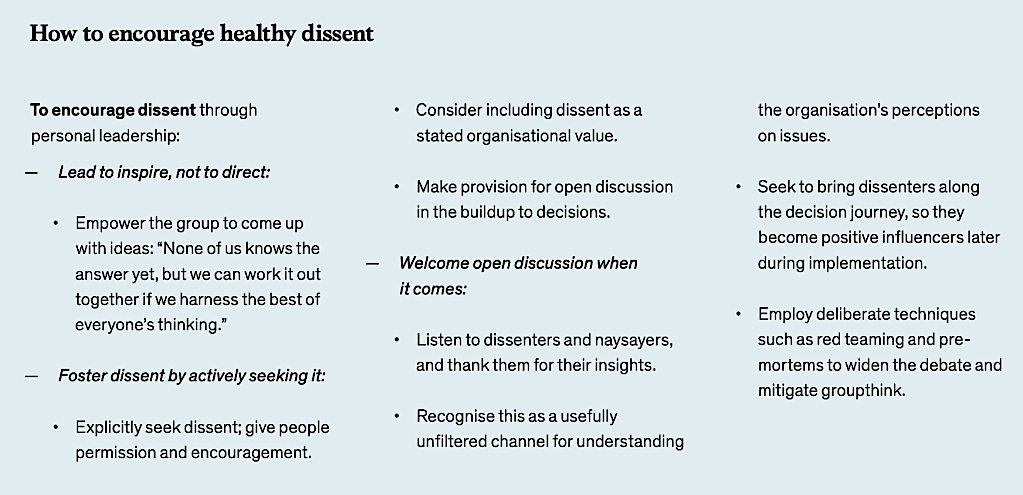
For those leaders keen to embrace healthy dissent, here’s some guidance from McKinsey’s. I have attached the full article below. Dissent may have the dividend of a better solution and stronger support / flexibility on the journey.
1. A summary of Radical Candor by Kim Scott: https://managementforstartups.com/articles/book-summary-radical-candor/
2. McKinsey article: “Into all problem-solving a little dissent must fall”:
 Facilitate Success