
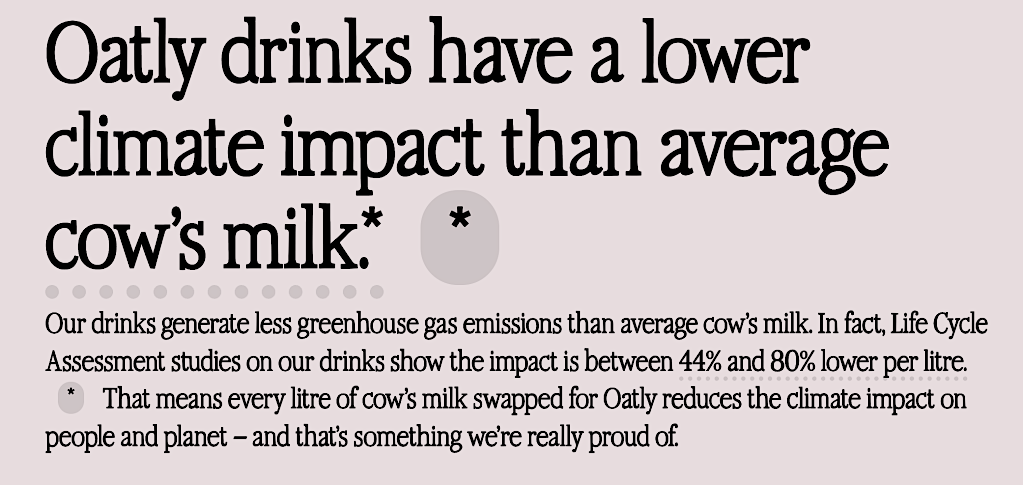
Claims influence. Consider the infamous Brexit claim that linked a misleading payment to Europe to an opportunity to fund the UK’s national health service. Or perhaps Oatly, who have assertively claimed their climate advantage to motivate the swap to oat milk. Oatly has been successfully called out for some inaccurate numbers, but fact-based comparison Vs milk has been central to its distinct brand identity.
The deployment of claims is therefore important and, appropriately, this is supported by evidence. For example, research by Andre, Chandon and Haws found food packs with claims on healthiness and dieting benefits were more likely to be chosen than those without. Interestingly, they also observed these claims influenced perceptions irrespective of the actual nutritional quality of pack contents. Such findings are a vindication for making sure packaging and advertising include strong and relevant claims. They also justify energy in challenging misleading competitor claims.
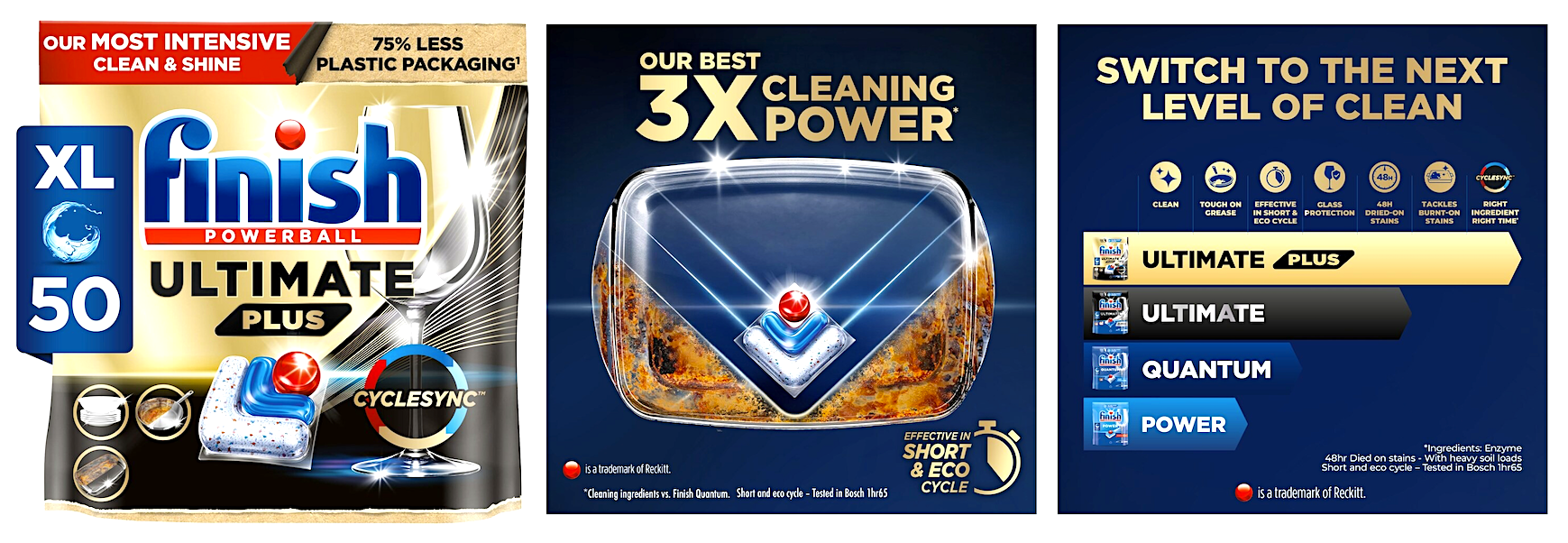
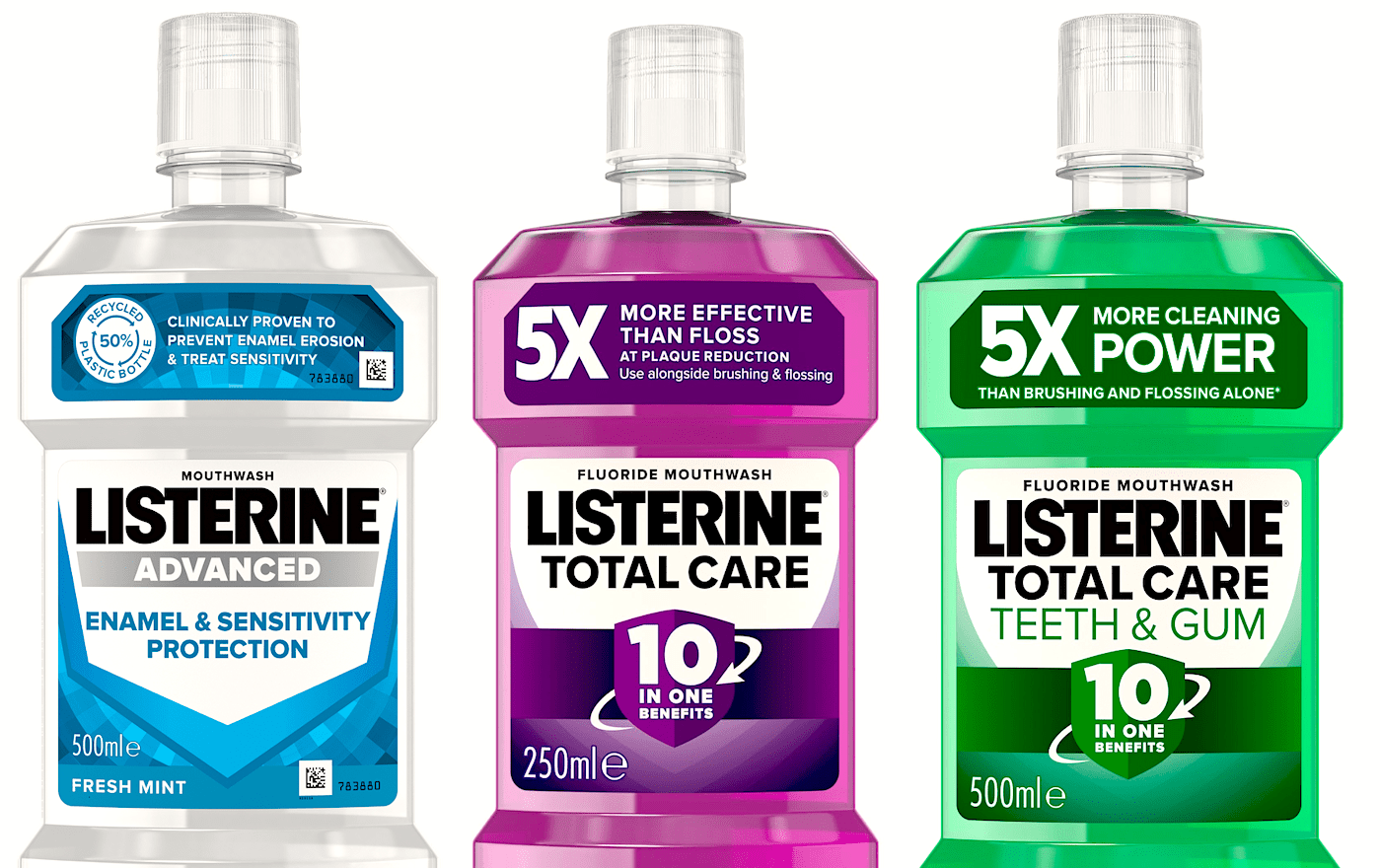
Research reassuringly also suggests claims will be more persuasive when they talk to a buyer’s motivation. Communicating effective core category benefit delivery is therefore vital. Consider Listerine’s consistent presentation of generic mouthwash benefits (comparing efficacy / reach to brushing and flossing alone). Listerine’s ‘ownership’ of category benefits implies leadership of what is important. Finish, keen to motivate trade-up consumers uses claims to differentiate cleaning performance across tiers.
Here are some further findings you might want to consider for future claims development.
1. Visuals strengthen persuasion
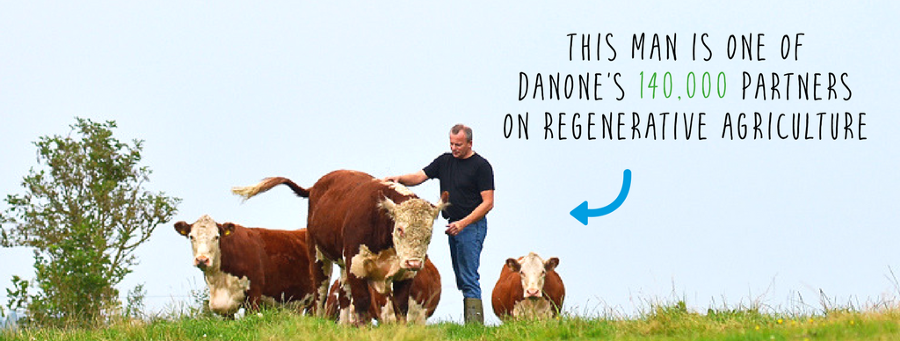
Research reviewing CSR communication and claims indicates that the combination of ‘concrete’ CSR claims and supporting images will be more effective in convincing skeptical consumers (who may be less able to visualise claims). By implication product claims without the opportunity to see supporting evidence will be less persuasive.
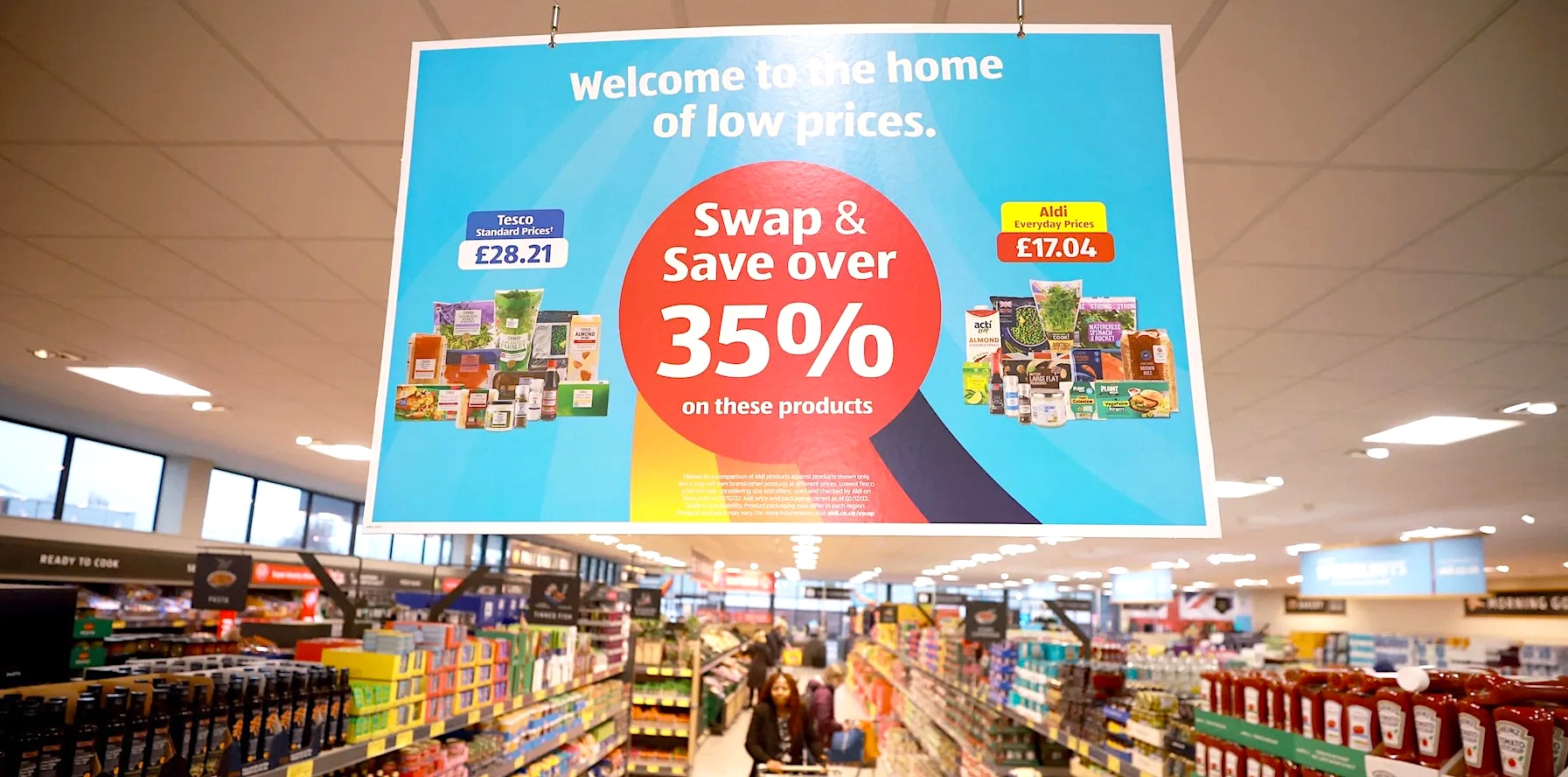
Aldi’s claim of significant savings Vs Tesco that is supported with comparable product selections will have helped overcome more sceptics.
2. More puffery, less purchase intent
Academics have assessed the relative power of low Vs high puffery claims. Puffery is open to some interpretation but is defined as “wildly exaggerated, fanciful or vague claims” or “product descriptions that purport to be important but actually provide little if any meaningful information” (Xu & Wyer, 2010). Findings warn against a strategy of words without substance, indicating lower levels of puffery increases perceived truthfulness and purchase intentions of consumers (Simons, 2017).
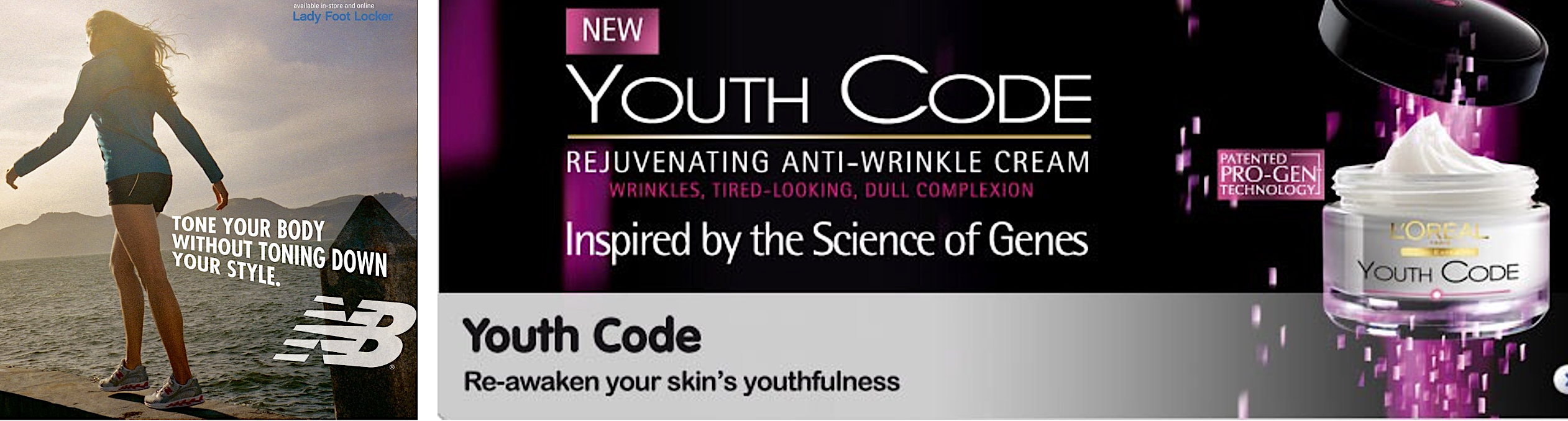
L’Oreal’s attempt to suggest a gene science breakthrough with youth code is a cautionary example. The line “inspired by the science of genes” was combined with ‘clinical’ evidence that highlighted differences between younger and older skin that had no direct link to ingredient or product efficacy. L’Oreal’s communication focus on creating a link to gene-related benefits took it beyond evidence and ultimately led to a charge of deceptive advertising. New Balance, similarly struggled to attach evidence to sneakers promising body toning benefits.
(If embarking on puffery, making it clear it shouldn’t be taken literally is wise. Red Bull adjusted it’s slogan to “Red Bull gives you wiiings” to ensure it was interpreted as a metaphor following a legal challenge that it implied a a claim of higher benefits than alternatives such a coffee. The brand has now retained the distinctive slogan for almost 30 years).
3. Familiar and easy to comprehend helps credibility
The table below is from research assessing scientific claims promoting cosmetics (Fowler, Carlson and Chaudhuri, 2019). Analysis categorised claims and coded consumer responses as either positive, negative or neutral. What was notable was artificial formula-based claims (e.g. contains Mexoryz) or process-technology based claims (e.g. uses stem cell technology) were viewed predominantly negatively. It suggests claims will be more positively received (and so be more credible) where language is more familiar and where it fits with consumer beliefs (e.g. natural is better).
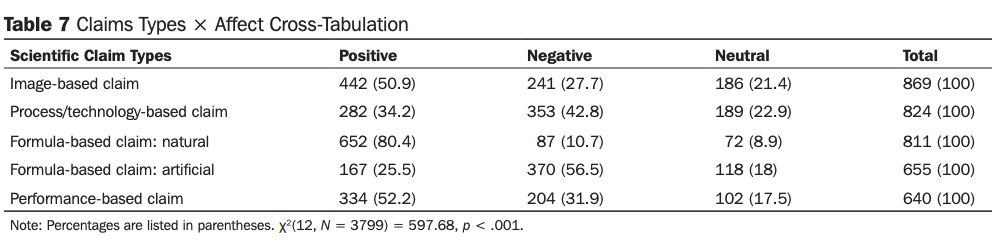
The research paper on cosmetic claims from Journal of Advertising Research can be accessed with this link.
Finding a succinct and clear way to claim distinct / leading benefits should be the ambition. Claims represent a key opportunity to translate organisational competitive advantage into higher purchase intent.
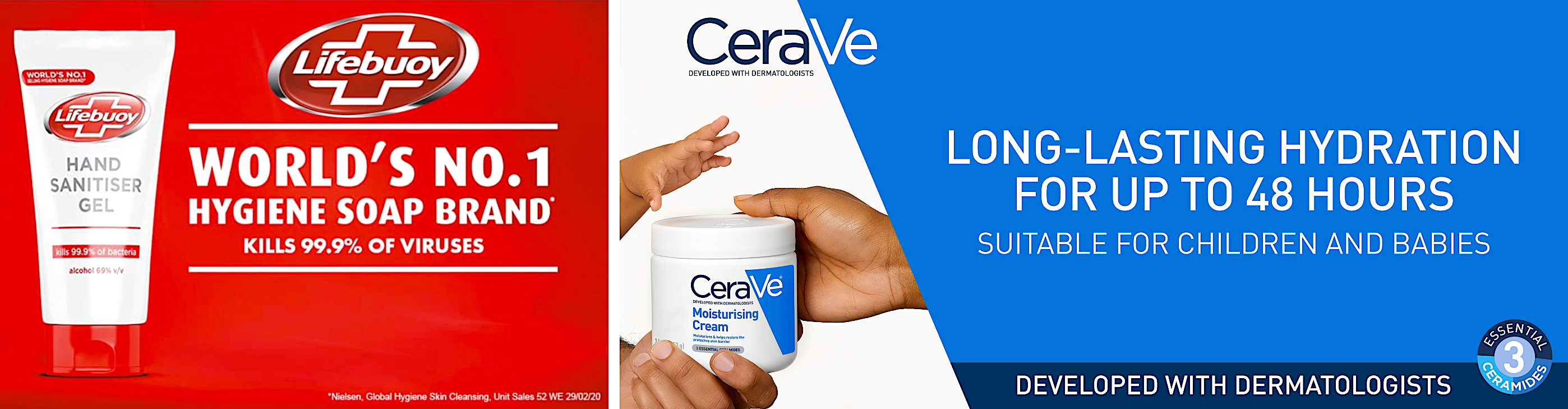
Research, however, also emphasises the common sense of claims where a competitive advantage may not exist. Simple, comprehensible claims can cement an attachment to core category benefits that shoppers expect and their absence risks a lower share of purchases. Consider the claims Lifebuoy or CeraVe –the confirmation of generic benefits such as “kills 99% of viruses” or reaffirming of strong endorsement may not be exciting consumer news but they succinctly establish credibility to category buyers.
Based on research and my work across brands I have summarised what I hope is a useful checklist:
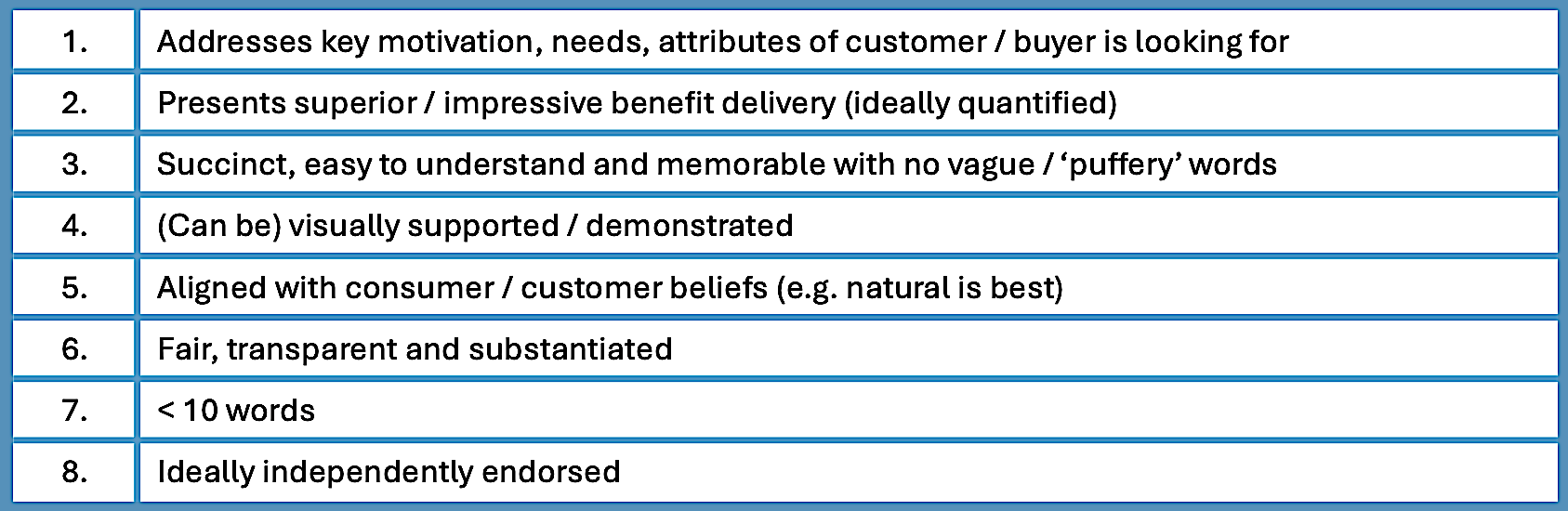
Claims start are founded on understanding the advantages you have in how you deliver solutions and their translation into benefits. To persuade they need to standout, resonate and motivate on what matters to your target buyers. Focused, succinct and memorable statements clearly help and can provide the clarity for high impact creativity. Consider how Volvo’s high-precision steering enabled exceptionally control when reversing at speed…
I attach some claim inspiration below. This supports thinking across different claim routes. It is only helpful after the hard work is done on exploring and connecting consumer insight with competitive advantage!
 Facilitate Success